Learning about and from Shoah
Can we acknowledge the historical singularity of the Holocaust while also considering its wider moral and political implications? Is it possible to draw lessons from the Holocaust without relativizing its uniqueness or instrumentalizing its memory?
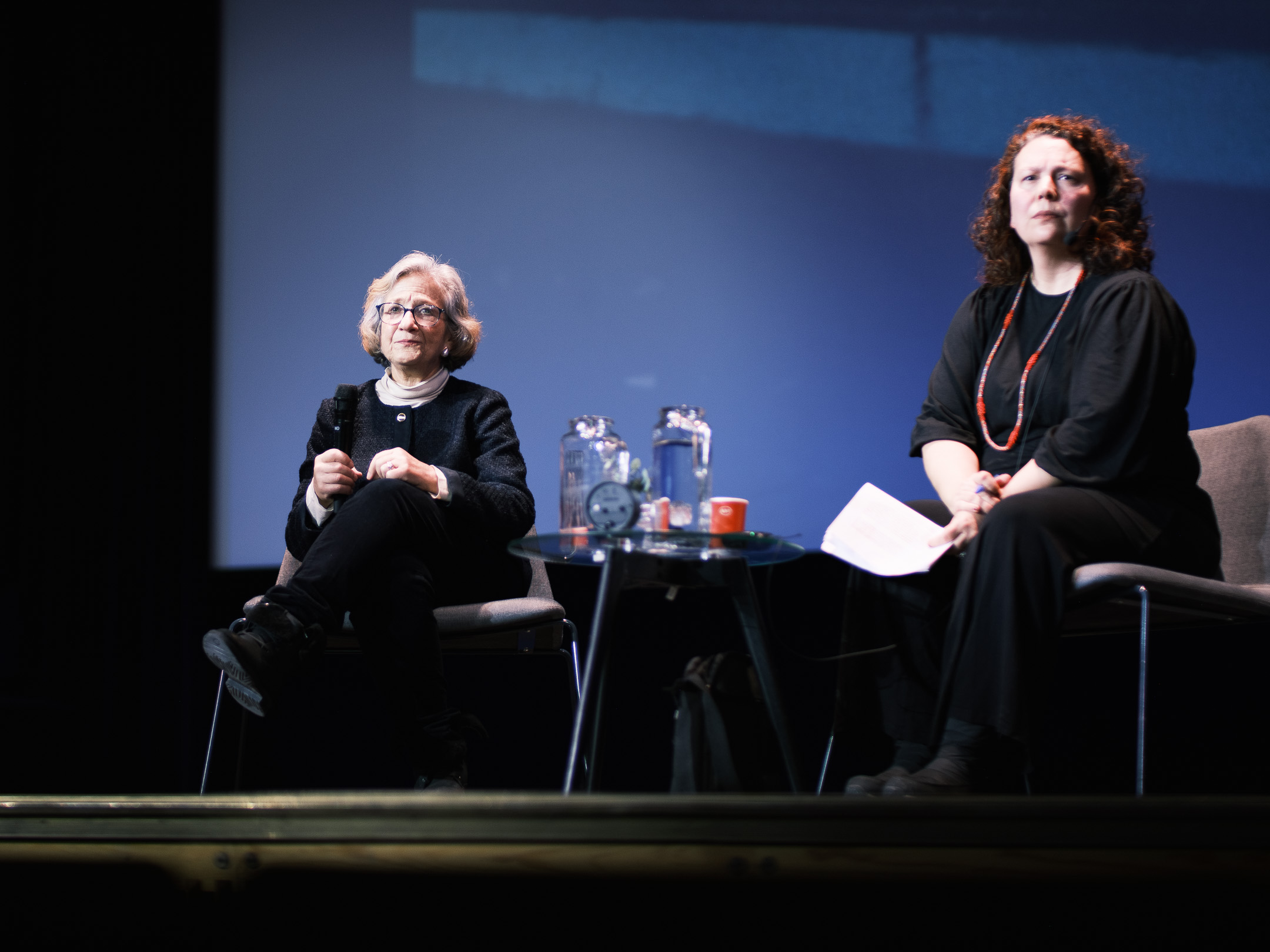
These questions framed the conversation at an event co-organized by the Robert Weil Family Foundation on Holocaust Memorial Day, featuring a full-day screening of Claude Lanzmann’s landmark documentary Shoah along with discussions with invited guests.
The conversations highlighted the importance of learning about the Holocaust in its own right – and of recognizing the central role antisemitism played in enabling the worst crime against humanity of our time. At the same time, they pointed to ideologies which pit us against them and dehumanize the other as present in all societies that commit genocide.
Rounding off the evening, our guest of honor, the world-renowned Holocaust historian Deborah Dwork, noted that to her, history is not a lesson but an invitation to learn. She reflected that the Holocaust serves as her moral compass in her continued quest to ask and answer questions.
The Robert Weil Family Foundation recently secured the rights to Shoah through a collaboration with the Swedish Holocaust Museum and Folkets bio, bringing it back to Swedish audiences forty years after its premiere and eighty years after the liberation of Auschwitz-Birkenau.